First-of-its-kind resident research quantifies the satisfaction gap between AI-first and human-available maintenance.
Multifamily operators are automating faster than ever. AI-powered chatbots field after-hours calls. Voice assistants capture work order details. Automated triage routes requests without human intervention.
But the metrics that justify automation aren't the metrics residents use to evaluate service. Response time can be instant and still feel impersonal. Deflection rates can climb while satisfaction flatlines.
HappyCo commissioned independent research to find out what residents actually want. The findings – from 299 multifamily residents across North America – make the case for a hybrid approach: efficiency when they want it, empathy when they need it.
Where AI Wins
Two-thirds of residents (67%) are comfortable turning to AI for general questions – pool hours, lease terms, quick answers without tracking down the front office. More than half (56%) trust AI to handle a routine maintenance issue from start to finish.
As one resident put it: “It was easy and simple to schedule my appointment. The chatbot was fast and easily understood what I needed.”
For some, the impersonal nature is the appeal: “It's easier on my well-being not having to talk to an actual person. It takes the stress and possible guilt of having something go wrong in the apartment.”
AI has cleared a credibility bar. Speed, availability, consistency – residents recognize the value when it's deployed for the right scenarios. The operators already leaning into this are using AI to capture request details before routing to the right tech, answer "where's my work order?" at 11 PM, and surface unit history so technicians arrive prepared.
Where It Doesn't
The research surfaced a key finding: 51% of all maintenance requests qualify as emergencies. That's where resident preferences flip.
82% prefer human interaction first when an urgent maintenance issue arises. That holds even among AI-experienced residents – 74% of those who've used AI for maintenance still want a person when emergencies hit.
The preference comes down to problem-solving. As one resident explained: "With a real person who knows their business, you can get more information from the questions they know to ask."
AI handles scripts. Humans handle judgment. The operators getting this right aren't routing every interaction through the same funnel – they're building systems that escalate to humans when the stakes rise. That's exactly why HappyCo built Happy Force: 24/7 remote maintenance staffed by experienced technicians who can dispatch help immediately. No call trees. No chatbot loops.
“AI doesn't fix buildings; people do. When you can leverage technology to respond faster, communicate better, and show up for residents proactively, everything else – efficiency, performance, culture – follows." ”—Heidi Turner, Principal and Co-Founder, Blanton Turner
The Satisfaction Gap
When residents rated the mechanics of their maintenance experience – professionalism, scheduling, response speed – humans and AI scored identically. Both hit 83% satisfaction. The task gets done either way.
But maintenance isn't just task completion. It's one of the few direct touchpoints between residents and property operations. How those interactions feel shapes whether someone views their apartment as temporary housing or somewhere worth staying.
That's where the gap emerges.
When asked whether the interaction improved their overall satisfaction with their property.
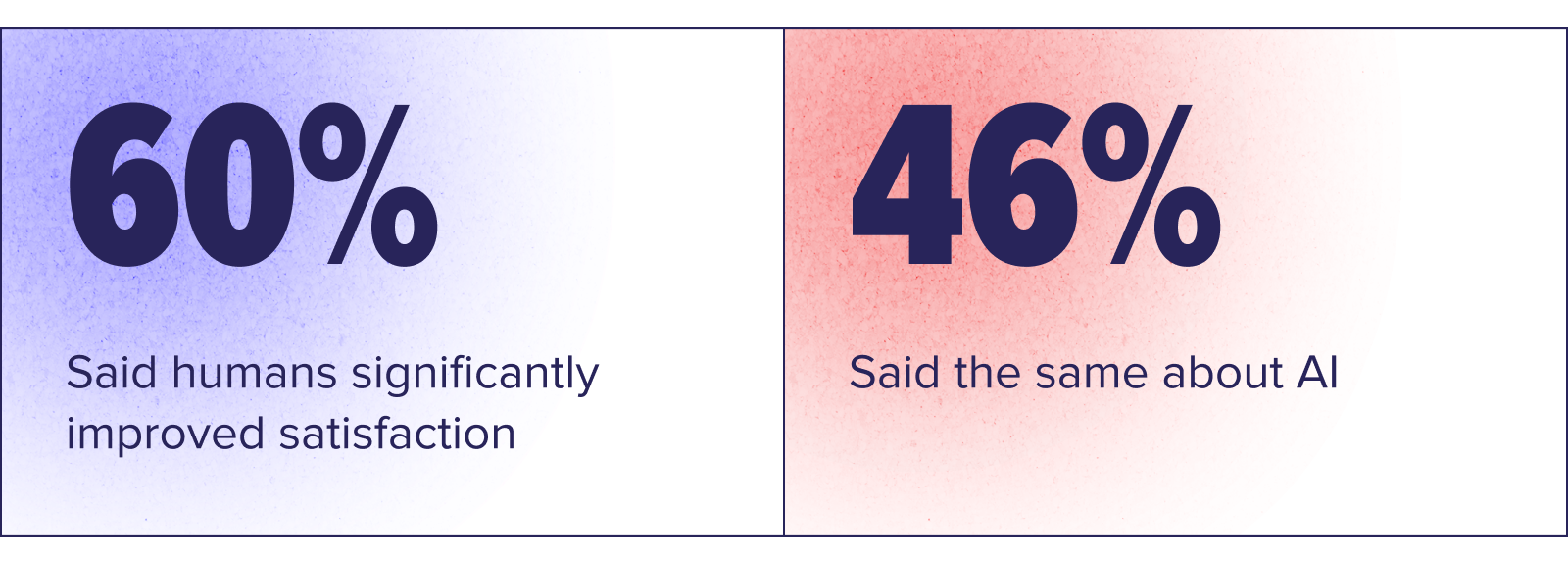
Same resolution. Same timeline. 14-point difference in how residents feel about where they live.
That emotional gap doesn't stay emotional. It shows up in renewal conversations, online reviews, and the operating costs tied to turnover.
See how satisfaction connects to renewals →
The Renewal Math
When asked how support options affected their likelihood to renew:
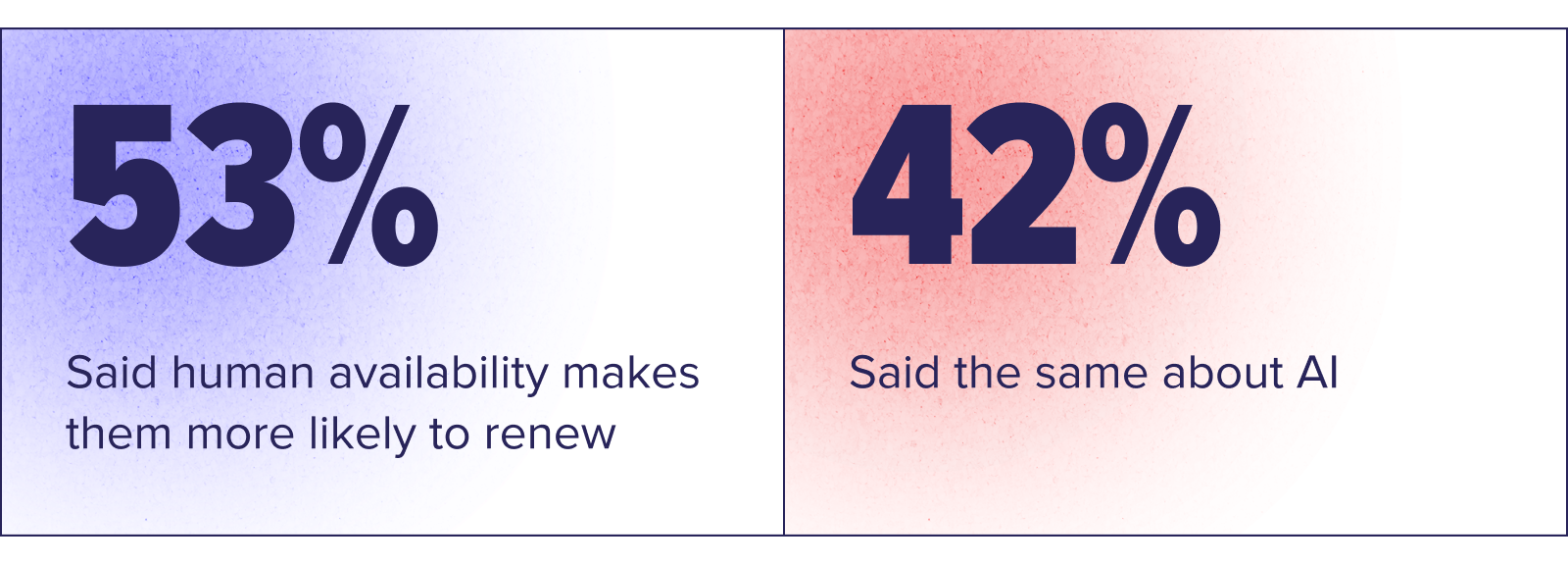
That 11-point gap is real money. For a 1,000-unit portfolio, it translates to $132K–$440K in protected NOI annually.
The pattern echoes what we've called the maintenance metric trap: operators optimizing for deflection while missing the metrics that actually drive retention. Only 6 - 9% of maintenance requests can be truly self-resolved. Human accessibility isn't a fallback – it's infrastructure.
The Dinerstein Companies saw this play out. By pairing AI-powered triage with 24/7 human support, they cut after-hours call volume by more than 50% – without sacrificing the moments that shape renewal decisions.
“With Happy Force, our after-hours calls dropped by more than 50%, which means our maintenance teams actually have peace of mind when they go home.” —John Barr, Director of Leasing and Innovation, The Dinerstein Companies
The Path Forward
The automation race isn't slowing down. But the properties pulling ahead aren't the ones deflecting the most calls – they're the ones giving residents the right option at the right time.
AI for efficiency. Humans for trust. The research shows exactly where each delivers value.