


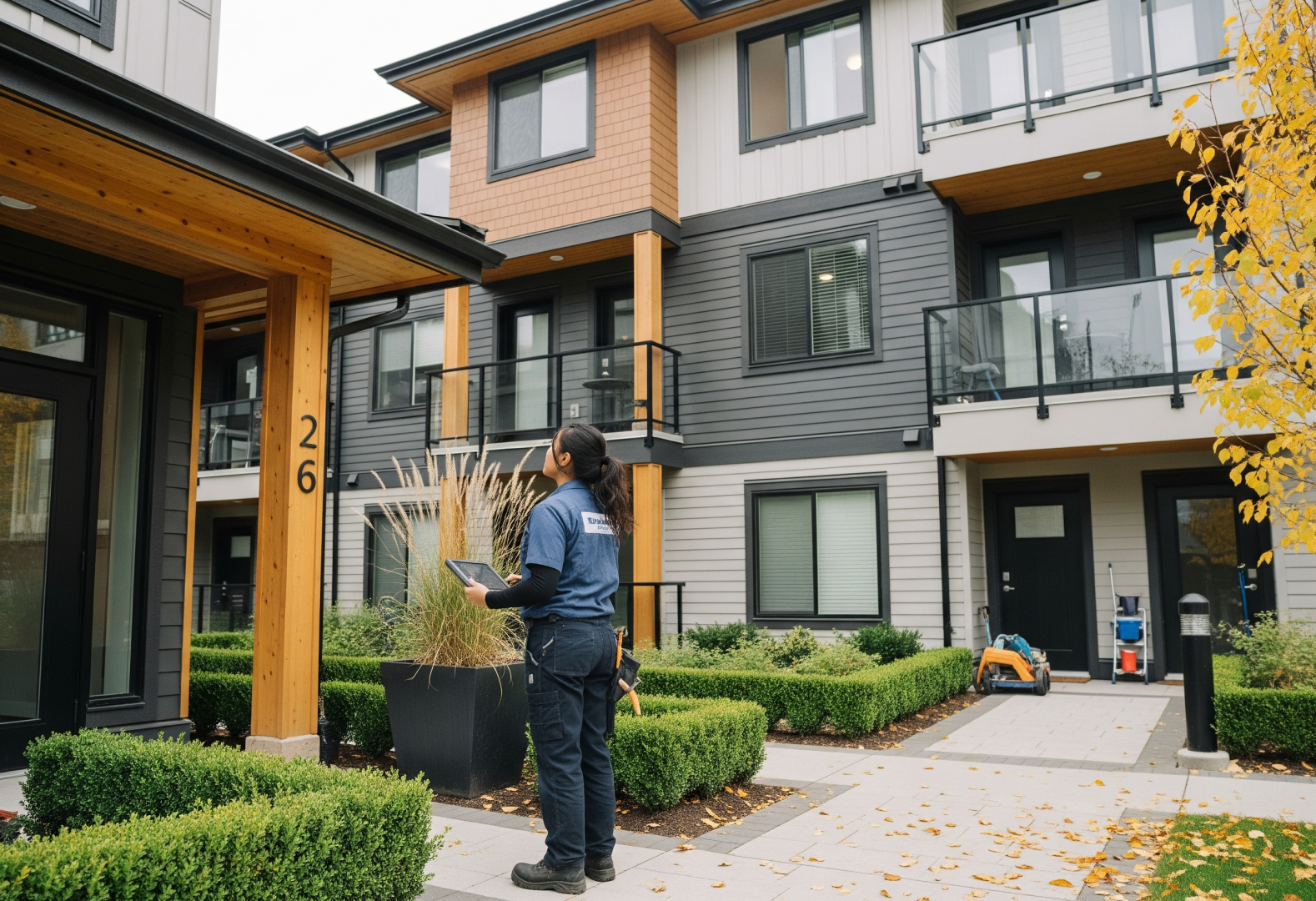


Why Fall Property Maintenance Matters
Operators who treat fall maintenance as optional tend to learn quickly that it isn’t. Here’s what’s actually at stake when seasonal maintenance gets skipped or delayed.
1. Expensive Winter Repairs
The repairs that hit hardest in winter are almost always problems that existed before the season started. Frozen pipes that burst were pipes that weren’t insulated in fall. Ice dams that peel off gutters and damage roofing were the result of clogged gutters and insulation gaps that were there all along. HVAC failures on cold nights happen to systems that were already struggling before the heating season began.
The math is straightforward. A professional furnace tune-up runs $80 to $150 per unit. An emergency HVAC replacement in January can run $5,000 or more — plus after-hours labor, resident remediation, and the operational disruption of managing it mid-crisis. Water damage from a burst pipe in an occupied unit can run five figures before it’s resolved. Fall maintenance is, first and foremost, a cost-management strategy.
2. Energy Efficiency & Costly Bills
In multifamily buildings, HVAC inefficiency and thermal envelope gaps don’t affect just one unit, they drive up utility costs across entire buildings. Air leaks around windows and doors, under-insulated attics, and poorly maintained heating systems force equipment to work harder and run longer to maintain temperature.
Fall is when you address these. Weatherstripping, caulking, heating system service, and insulation improvements are all fall maintenance tasks with measurable impact on winter operating costs. The U.S. Department of Energy estimates that proper insulation and air sealing can reduce heating costs by up to 30%. At portfolio scale, that’s a meaningful number.
3. The Structural Integrity of Your Properties
Water is the most patient destroyer of residential structures — and fall creates multiple entry points. Through gaps in roofing, via overflowing gutters, through foundation cracks opened by freeze-thaw cycles, and around improperly sealed windows and doors. Once moisture gets into structural elements whether through framing, sheathing, or insulation, the damage is expensive, slow to become visible, and fast to get worse.
A thorough fall maintenance checklist that covers roofing, gutters, grading, foundation, and exterior sealing is fundamentally a water management plan. Keeping water out of your building envelope is one of the most important things you can do to protect long-term asset value.
Complete Fall Maintenance Checklist for Property Managers
Work through this fall maintenance checklist systematically — ideally starting in September and completing before the first hard freeze in your market. For portfolio operators, this checklist should be standardized and applied consistently across every property.
Exterior Fall Maintenance Checklist
The outside of your buildings takes the hardest hit in winter. Prioritize exterior inspections early while outdoor work is still comfortable and contractors are still available.
- Roof inspection: Check for missing, cracked, or curling shingles across all buildings. Inspect flashings, vents, ridge lines, and chimney surrounds. Address vulnerabilities before snow and ice load arrives.
- Gutters and downspouts: Clean out debris and confirm gutters are properly pitched toward downspouts. Verify downspouts are directing water at least three to four feet away from foundations. For properties with heavy tree cover, consider gutter guards to reduce ongoing maintenance burden.
- Exterior caulking and sealing: Inspect caulking around all windows, doors, utility penetrations, and transitions between different exterior materials. Re-caulk anywhere the seal is cracked, shrinking, or missing.
- Foundation inspection: Check for new cracks or widening of existing ones. Confirm grading around every building slopes away from the foundation to direct water outward.
- Walkways, parking areas, and common surfaces: Fill cracks before freeze-thaw cycles expand them. Address uneven surfaces that become safety and liability hazards when icy.
- Exterior siding and paint: Flag areas where paint is peeling or siding is damaged — moisture entry points that compound over winter.
- Exterior lighting: Test and replace bulbs across all common areas, parking lots, and building entries. Winter means longer dark hours and higher safety stakes.
- Building entries and vestibules: Inspect door sweeps, weatherstripping, and door closers on all building entries. These take heavy traffic and wear quickly.
- Garage doors and parking structures: Test balance, auto-reverse, and weatherstripping. Lubricate hardware. Check drainage in parking structures.
- Chimneys and vents: Inspect and clean before heating season. Check that exhaust vents for HVAC, dryer, and water heater systems are clear and properly sealed.
Interior Maintenance Checklist for Fall
- Unit window and door seals: Inspect weatherstripping and caulking at unit windows and entry doors. Replace worn weatherstripping and address gaps between frames and walls. In older buildings, this alone can meaningfully reduce heating costs.
- Attic and building insulation: Inspect insulation levels in attic spaces and above top-floor units. Reference Energy Star guidelines for recommended R-values by climate zone.
- Smoke and carbon monoxide detectors: Test every detector in every unit and common area. Replace batteries and any units over ten years old. As heating season begins, CO detector function is especially critical — and legally required in most jurisdictions.
- Common area ceilings and walls: Check for water staining that may indicate roof or plumbing issues. Fall is the time to find these, not after winter makes them worse.
- Basement and crawl space: Inspect for moisture, new cracks, and pest activity. Check sump pump operation before heavy fall rains begin.
- Dryer vents: Clean dryer vent ducts in all units. Lint accumulation is a fire hazard and a recurring maintenance issue in multifamily settings.
- Ceiling fans: Reverse to clockwise rotation at low speed to push warm air down — a simple efficiency measure that residents rarely think to do themselves.
HVAC and Heating System Checklist
In multifamily, HVAC is your highest-stakes maintenance category in winter. Don’t leave this section to chance.
- Furnace and heat pump service: Schedule professional maintenance for all heating units before the season. A technician should inspect heat exchangers, clean components, test safety controls, and confirm safe and efficient operation. Book early — HVAC vendors fill up fast in fall.
- Filter replacement: Replace filters across all units. In buildings with central systems, this has portfolio-wide efficiency implications. In individually-controlled units, include filter replacement as a fall maintenance touchpoint.
- Thermostat inspection and calibration: Test thermostats across units. If a property still has outdated manual thermostats, fall is a good time to evaluate the upgrade case for programmable or smart models.
- Ductwork inspection: Check accessible ductwork in mechanical rooms, common areas, and basements for gaps, disconnections, and damage. Leaky ducts reduce efficiency significantly and can be addressed with relatively low-cost sealing.
- Boiler systems: For properties with boiler heat, inspect and service before season. Bleed radiators to remove trapped air. Check expansion tanks and pressure relief valves.
- Common area HVAC: Don’t overlook HVAC in lobbies, corridors, fitness centers, and amenity spaces. These systems run hard all winter and often get less attention than in-unit equipment.
Plumbing and Water System Checklist
Burst pipe events are among the most expensive and most disruptive winter maintenance scenarios in multifamily. This section is worth taking seriously.
- Outdoor faucets and hose bibs: Confirm all exterior faucets are shut off at the interior valve and drained. Remove and store hoses.
- Irrigation systems: Coordinate professional blowout of irrigation systems before the first freeze date in your market.
- Pipe insulation: Inspect all plumbing in unheated spaces — crawl spaces, parking garages, mechanical rooms near exterior walls, and any areas where pipe runs are exposed to cold. Insulate anything vulnerable.
- Water heater inspection: Check all water heaters for corrosion, leaks, and sediment buildup. Flush tanks if maintenance history suggests it’s overdue. Verify temperature settings.
- Sump pumps: Test before heavy fall rain season. Verify float switches, discharge lines, and backup power if applicable.
- Shut-off valve documentation: Confirm maintenance staff know the location of every main water shut-off across all properties. This is critical response information when a pipe event happens at 3 a.m.
- Leak detection: Consider installing water leak sensors in high-risk areas — mechanical rooms, laundry facilities, and units above others — before winter increases the risk of pipe failures.
Yard & Outdoor Fall Maintenance Checklist
- Grounds and landscaping: Remove dead vegetation, cut back perennials, and apply mulch to protect plant root systems. Keep leaves cleared from foundation vents, window wells, and drainage areas.
- Tree and shrub inspection: Identify and remove overhanging or dead branches that could fall under snow or ice load — particularly any near buildings, HVAC equipment, or parking areas.
- Outdoor furniture and amenity equipment: Clean, inspect, and store or cover outdoor furniture and recreational equipment. Drain and winterize pool systems and outdoor water features.
- Lawn equipment winterization: Add fuel stabilizer to gas-powered equipment before storage. Clean and inspect tools.
- Drainage and grading: Walk the property perimeter and identify any low spots or drainage issues that could cause water to pool against buildings over winter.
Monthly Fall Maintenance Plan for Property Managers (Sept – Nov)
Spreading fall maintenance across three months makes it manageable at portfolio scale. Here’s how to pace it.
September: Early Fall Prep
September is your planning and scheduling month. The weather is still comfortable, and booking professional services now means you’re ahead of the fall rush.
- Book HVAC vendors for all properties — early booking matters, especially in colder markets.
- Begin roof and attic inspections across the portfolio.
- Test smoke and CO detectors in all units; document results.
- Inspect and clean dryer vents across the building.
- Begin exterior caulking and weatherstripping assessment.
- Identify pipe insulation gaps in mechanical areas and crawl spaces.
- Communicate fall inspection schedule to residents.
October: Mid-Season Maintenance
October is where the bulk of the outdoor work happens. Peak leaf fall, outdoor equipment winterization, and plumbing prep should all land here.
- Complete full gutter cleaning after peak leaf fall in your market.
- Shut off and drain all exterior faucets and coordinate irrigation blowout.
- Confirm pipe insulation is in place across all vulnerable areas.
- Test all sump pumps before any heavy rain or wet snow.
- Walk all property exteriors for foundation, siding, and drainage concerns.
- Service or inspect all boiler and hot water systems.
- Replace HVAC filters across the portfolio.
- Inspect and repair exterior lighting for all common areas and parking.
- Inspect all building entry weatherstripping and door hardware.
- Begin indoor common area inspections.
November: Winter Readiness
November is your final sweep. Everything that wasn’t addressed in September and October gets buttoned up before temperatures drop hard.
- Confirm HVAC service is complete and heating systems are operational across all units.
- Do a final walkthrough of all exteriors for caulking, sealing, and drainage concerns.
- Verify water heater inspections are complete.
- Confirm all shut-off valve locations are documented and communicated to maintenance staff.
- Check and restock emergency maintenance supplies: ice melt, salt spreaders, wet vacuums, and pipe repair kits.
- Send residents a winter preparedness communication covering their role in preventing. frozen pipes and reporting issues promptly.
- Review and close out any open work orders from the fall inspection cycle.
Quick Fall Maintenance List for Property Managers
Need a fast reference for your team? Here are the non-negotiable fall maintenance tasks:
- Service all furnaces and heat pumps.
- Replace HVAC filters across all units.
- Clean gutters and confirm downspout drainage.
- Inspect roofs across all buildings.
- Seal gaps at windows, doors, and penetrations.
- Drain and shut off all exterior faucets.
- Blow out irrigation systems.
- Inspect and insulate exposed pipes.
- Test smoke and CO detectors in all units.
- Test sump pumps.
- Inspect exterior lighting across common areas and parking.
- Clean dryer vents.
- Trim hazardous tree branches near buildings.
- Inspect and service boiler systems.
- Store or winterize outdoor amenity equipment.
- Document all inspections and findings.
Fall Maintenance Tips to Prepare Properties for Winter
1. Focus on Insulation First
In multifamily buildings, insulation gaps don’t affect one resident — they affect your operating costs across entire floors or buildings. Top-floor units are typically the most vulnerable, with heat loss through the ceiling driving up both unit-level discomfort and building-wide energy consumption. Attic insulation, combined with air sealing at penetrations and rim joists, is one of the highest-ROI investments you can make before the heating season. It reduces load on HVAC equipment, lowers utility costs, and improves resident comfort in the units most likely to generate complaints in winter.
2. Don’t Delay Gutter Cleaning
For multifamily operators, gutter failures don’t just affect one unit — they can damage roofing, siding, and foundation areas that affect entire building sections. Ice dams caused by clogged gutters lift shingles, allow water to infiltrate the roof deck, and can cause interior water damage to multiple units simultaneously. Clean gutters after peak leaf fall in your market and inspect downspout extensions to confirm water is being directed away from foundations. If your properties have significant tree coverage, consider installing gutter guards to reduce the maintenance frequency and associated labor cost.
3. Check Heating Systems Early
In multifamily, a heating system failure during a cold snap isn’t just a maintenance problem — it’s a habitability issue with legal implications in most jurisdictions. Landlords are legally required to maintain minimum temperatures in occupied units in most U.S. states, and failure to do so can create liability exposure and lease disputes. Schedule all furnace and boiler service in September, before HVAC vendors are fully booked with emergency calls. Prioritize your oldest equipment and any units with recent maintenance history that suggests developing problems.
4. Use Smart Thermostats
Smart thermostat installations in multifamily units have come down significantly in cost and complexity. For operators managing utility-included units, smart thermostats can measurably reduce energy consumption by optimizing heating schedules and preventing the overheating that happens when residents set thermostats and leave. For individually-metered units, smart thermostat upgrades can be a meaningful amenity that improves resident satisfaction and differentiates the community. Many utility companies offer bulk purchase rebates for property owners — worth exploring before heating season.
Common Fall Maintenance Mistakes to Avoid
1. Waiting Until Temperatures Drop
The most common fall maintenance mistake is delay. Once temperatures fall, outdoor work becomes harder, vendors are harder to book, and some problems have already become emergencies. The cost of urgency — emergency HVAC service rates, after-hours plumber dispatch, expedited contractor availability — is real. Start your fall maintenance program in September.
2. Cleaning Gutters Before Peak Leaf Fall
Cleaning gutters in late September when trees still have 80% of their leaves means doing the job twice. In most markets, late October to early November — after peak fall foliage — is the right timing for the most effective single cleaning of the season.
3. Skipping Furnace Inspections to Cut Costs
This is one of the most common deferred maintenance decisions in property management — and one of the most expensive ones when it catches up. A system running inefficiently costs more in energy every month it runs. One that fails mid-winter costs multiples of what a seasonal service call would have run, plus the operational disruption and resident impact of managing the failure.
4. Overlooking Pipe Vulnerability in Atypical Spaces
Burst pipe events most commonly involve plumbing that someone didn’t think to protect: pipes in unheated parking garages, crawl spaces under building additions, or lines running along exterior-facing walls in mechanical rooms. Walk every unheated and semi-heated space across your properties and identify exposed plumbing before the first freeze.
5. Inconsistent Inspection Standards Across Properties
Applying different levels of rigor to different properties — whether based on age, location, or portfolio priority — creates gaps that show up as expensive surprises. Standardized fall inspection checklists, applied consistently, are what ensure nothing slips through across a large portfolio.
6. No Documentation
Completing fall maintenance without documentation creates real risk. If a resident dispute, insurance claim, or habitability challenge arises, the question will be whether you can demonstrate that inspections were completed and issues were addressed. Paper checklists and memory don’t hold up the way timestamped, photo-supported digital inspection records do.
How AI & Technology Simplify Fall Maintenance
Coordinating fall maintenance across a large multifamily portfolio — dozens or hundreds of units, multiple properties, multiple vendors, and a tight seasonal window — is a genuine operational challenge. AI and technology are making it significantly more manageable.
Automated Maintenance Scheduling
Eliminate the manual effort of tracking and coordinating seasonal tasks across all your properties. HappyCo enables property teams to build seasonal maintenance schedules that automatically generate tasks, assign them to the right technicians or vendors, and track completion across the portfolio. When the schedule runs automatically, the risk of something falling through the cracks on property number twelve is the same as on property number one.
Predictive Maintenance Before Winter
This is where AI adds the most operational value. Rather than servicing all HVAC equipment on a uniform schedule regardless of actual condition, AI-powered tools analyze work order history, equipment age, and performance patterns to identify the assets most likely to fail under winter stress. That means your highest-risk units get serviced first — not because a supervisor had a hunch, but because the data said so.
Digital Inspection Tools
Turn fall maintenance from a coordination headache into a documented, defensible process. HappyCo’s inspection platform lets maintenance teams conduct standardized fall inspections across every unit and common area, capture timestamped photos of every finding, automatically generate work orders from inspection results, and store everything in a searchable audit record. What used to require days of paper-based coordination happens faster, more consistently, and with documentation that actually holds up.
Portfolio-Wide Visibility
is the thing that changes the most for operators managing multiple properties. Instead of relying on individual site supervisors to report what’s been completed, platforms like HappyCo give regional and portfolio-level leadership real-time visibility into where fall maintenance stands across every asset — what’s been inspected, what’s been flagged, what’s open, and what’s been resolved.
The Ultimate Fall Maintenance Checklist for Property Managers
Fall maintenance is a short window with long consequences. The properties that come through winter in the best shape — fewest emergency repairs, lowest energy costs, best resident experience — are the ones where someone made deliberate decisions in September, October, and November about what needed to happen before temperatures dropped.
For property managers and multifamily operators, the fall maintenance checklist in this guide gives you a complete framework: exterior, interior, HVAC, plumbing, grounds, and a month-by-month plan to coordinate it across your portfolio. The operators who run this process consistently, with standardized checklists and proper documentation, aren’t just protecting their buildings. They’re protecting their relationships with residents, their compliance posture, and the long-term value of the assets they manage.
Fall is when proactive operations separate themselves from reactive ones. This is the time to do it.
Simplify Fall Property Maintenance With HappyCo
For property managers and multifamily operators coordinating fall maintenance across multiple rental units, the challenge is less about knowing what to do and more about getting it done consistently, across every property, with documentation that holds up. That’s where HappyCo comes in.
With HappyCo, property teams can:
- Conduct standardized fall inspections across every unit and common area.
- Automatically generate work orders from inspection findings.
- Track seasonal maintenance tasks and completion across the portfolio.
- Use AI-powered insights to prioritize the assets and systems at highest risk before winter.
- Store audit-ready documentation of all inspections, repairs, and safety checks.
- Coordinate HVAC service, plumbing winterization, and exterior maintenance from a single platform.
FAQs
What Is the Most Important Fall Maintenance Task for Property Managers?
If you’re forced to prioritize one thing, heating system service across all units is the answer — particularly in cold-climate markets. A heating failure in an occupied unit isn’t just an operational problem; it’s a habitability issue with legal implications in most jurisdictions. Close behind it: gutter cleaning to prevent ice dams and foundation water damage, and exterior air sealing to reduce energy costs across the building. These three tasks address the most common and most costly winter scenarios at the property level.
How Long Does Fall Property Maintenance Take Across a Portfolio?
It depends on portfolio size, property age, and condition — but most operators should plan for a six-to-eight-week window from mid-September through early November. The key is starting early enough that professional services (HVAC vendors, irrigation contractors, chimney sweeps) can be booked without urgency pricing, and finishing before the first hard freeze in your market. A standardized inspection and scheduling system shortens the coordination time significantly compared to managing it manually.
What Happens if Fall Maintenance Gets Skipped or Delayed?
In the short term, probably nothing visible. That’s the problem. Deferred fall maintenance shows up in winter as emergency repairs, elevated energy costs, resident complaints, and in the worst cases, habitability issues with legal implications. Frozen pipe events, HVAC failures in extreme cold, and water damage from ice dams are all significantly more likely — and more expensive — in properties that weren’t prepared in fall. The cost of prevention is almost always a fraction of the cost of the emergency.
How Does Fall Maintenance Help Reduce Energy Costs Across a Portfolio?
Several fall maintenance tasks directly reduce winter operating costs at scale. Air sealing gaps at windows, doors, and penetrations eliminates drafts that force heating systems to run longer. Attic insulation improvements reduce heat loss through building ceilings. Properly serviced furnaces and boilers operate more efficiently, consuming less fuel to maintain temperature. At portfolio scale — across dozens or hundreds of units — these improvements compound into meaningful reductions in energy costs through the heating season.
What Are the Signs a Property Needs Fall Maintenance Attention?
Key indicators include HVAC units that struggled to keep up during the summer heat, recent work orders for plumbing issues in vulnerable areas, gutters visibly sagging or pulling away from fascia, visible caulking gaps or peeling paint on exterior surfaces, water staining on interior ceilings or walls indicating past infiltration, and any equipment that’s approaching or past its expected service life. Properties with deferred maintenance from prior seasons should be prioritized early in the fall inspection cycle.
Are Fall Maintenance Priorities Different in Cold vs. Mild Climates?
Yes, meaningfully so. In cold-climate markets — anywhere with hard freezes and significant snow load — pipe insulation, heating system service, and gutter maintenance are genuinely urgent. Frozen pipes and ice dams are real and costly risks. In mild-climate markets, the urgency around plumbing winterization is lower, but roof and gutter maintenance still matters (especially in rain-heavy regions), HVAC service remains important for systems running year-round, and exterior inspections are still worth doing on a seasonal schedule. The core principle — address vulnerabilities before conditions worsen — applies everywhere.
Lauren Seagren is the Content Marketing Specialist at HappyCo, where she leads the company’s content strategy and storytelling across channels. She develops and optimizes campaigns, blogs, case studies, and enablement materials, while building the systems that help content scale and align across teams. Prior to HappyCo, Lauren led content and brand strategy across SaaS startups, creative agencies, and growth-stage companies, bringing more than a decade of experience driving measurable growth across B2B and B2C organizations.


